
I still remember the day I opened my Xbox app back in March 2018 and did a genuine double-take. I had been a Game Pass subscriber for a while, and I was already hooked on the whole “Netflix of gaming” idea — pay a monthly fee, get a rotating pile of games, no-brainer. But when Microsoft dropped the March lineup, I remember thinking, okay, this is not messing around anymore. Eight games, including a brand-new first-party release on day one? That was the moment Game Pass went from “nice bonus” to “whoa, this is the future.”
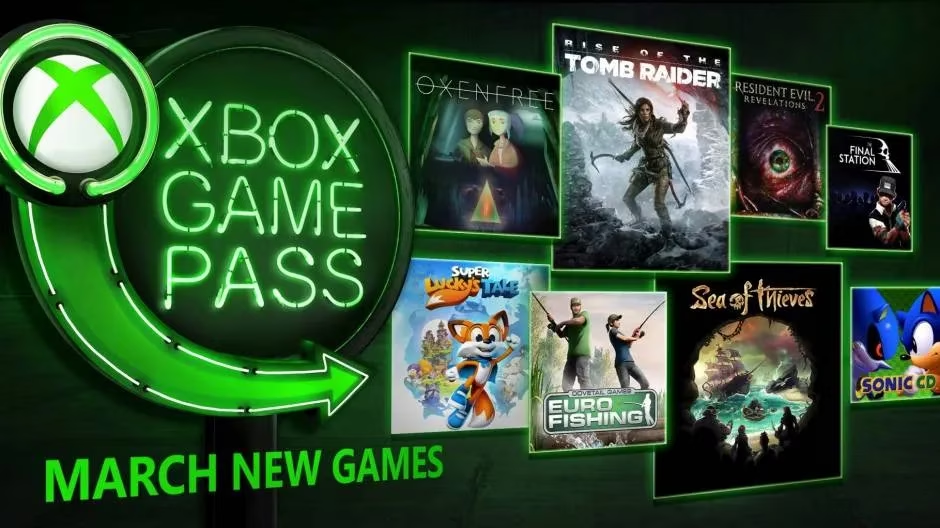
Looking back from 2026, it is easy to take day-one releases on a subscription service for granted. These days, the whole industry has shifted, and Game Pass has grown into something downright wild compared with its early days. But in 2018, the March lineup felt like a statement. Microsoft had teased the announcement the week before, and when the full roster landed, I was buzzing. This was not just a random dump of older titles — this was a proper mix of new releases, cult favorites, and family-friendly fun.
Here is the lineup as I remember it, laid out like a proud collector showing off their shelf:
| Game | Why It Mattered to Me |
|---|---|
| Sea of Thieves | The headline act — a new Xbox One exclusive launching on Game Pass the same day as retail and digital |
| Rise of the Tomb Raider | A big-budget adventure that made the service feel premium |
| Super Lucky’s Tale | A cheerful platformer that balanced out the pirates and raiders |
| Resident Evil Revelations 2 | Cheesy, creepy, co-op-friendly survival horror |
| Oxenfree | A moody narrative gem that I still recommend to friends |
| Sonic CD | Pure nostalgic speed, and a nice nod to classic gaming |
| The Final Station | A bleak little indie trip that surprised me |
| Euro Fishing | The wildcard — because every lineup needs one |
Sea of Thieves was the cherry on top. Microsoft had already announced that new Microsoft Studios titles exclusive to Xbox One would be included in Game Pass, and Sea of Thieves was one of the first big tests of that promise. It launched on March 20, 2018, and Game Pass subscribers got it on the very same day it hit stores and digital shelves. I remember a bunch of my friends who had been on the fence about buying it suddenly saying, “Well, it’s on Game Pass, so why not?” That was the power of the service in a nutshell. It lowered the barrier and turned curiosity into a download.
The company also made it clear that this was not a one-off. Upcoming Microsoft Studios exclusives like Crackdown 3 and State of Decay were part of the plan, while games like Halo 5: Guardians and Halo Wars 2 were already sitting on the service. For a Halo fan like me, that was a big deal. I had friends who had never touched an Xbox One before, and suddenly they could jump into Halo 5 without dropping extra cash. That kind of access felt generous, and honestly, a little bit sneaky-smart on Microsoft’s part.
The other seven games were expected to arrive near the beginning of March 2018, and that staggered rollout kept me checking the app like a kid waiting for the school bell. I spent a weekend bouncing between Rise of the Tomb Raider and Oxenfree, which is a weird combo when I say it out loud, but that is exactly what I love about Game Pass. One minute I am scaling icy cliffs and raiding tombs, the next I am having a quiet, spooky conversation on a radio. The service gave me permission to try things I might never have bought outright. The Final Station is a perfect example — I probably would have skipped it in a store, but because it was right there in the library, I gave it a shot and came away impressed. Same with Euro Fishing, which I installed purely as a joke and then somehow played for two hours. No regrets.
What strikes me most from a 2026 perspective is how innocent and exciting that March 2018 lineup felt. Game Pass was still proving itself. The idea of a first-party exclusive launching on a subscription service was not yet the norm, and Sea of Thieves became a real milestone. It was not just about saving money — it was about changing how I discovered games. The service turned my backlog into a playground. If a game did not click, I could delete it and move on without feeling like I had wasted my cash. If it did click, I could dive deep and become a fan for life.
So yeah, I look back at that month with a lot of fondness. It was the moment Xbox Game Pass stopped being just a catalog and started feeling like a living, breathing service with real momentum. In 2026, the gaming landscape is different, and subscription libraries are everywhere, but I still measure new announcements against that March 2018 lineup. Eight games, one big day-one exclusive, and a whole lot of “why not?” energy. For me, that was the month the Netflix of gaming truly earned its nickname.