
As I booted up my console in 2026, I found myself reflecting on a curious trend that has woven itself through my decades of gaming: a deep and abiding affection for skeletal characters. Isn't it strange? We're talking about animated collections of bones, symbols of mortality and decay, and yet, in the digital realm, they've become some of the most iconic, beloved, and flat-out coolest figures to ever grace a screen. My journey through gaming's history has been punctuated by these bony companions and adversaries, from the terrifying villains that made me jump to the hilarious friends who had me laughing until my own ribs ached. They aren't just mindless cannon fodder; they're protagonists, comic relief, tragic heroes, and fearsome lords. Let me take you on a tour of the skeletons that have left an indelible mark on my gaming soul—the ones who truly deserve a throne built from their own iconic legacy.
🦴 The Fighters: Skeletons with a Killer Instinct
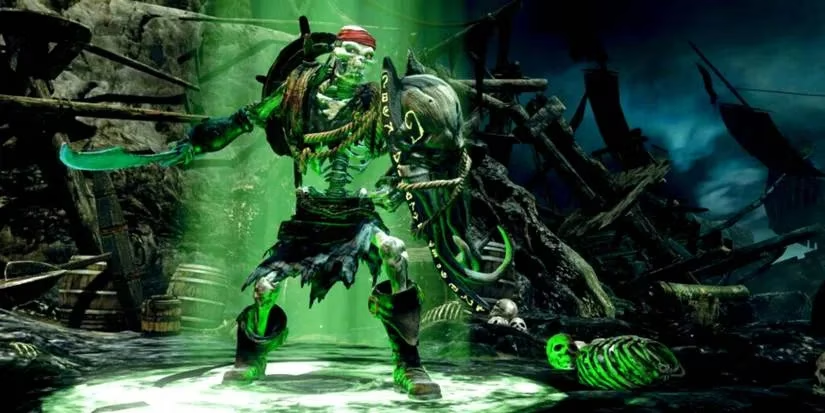
My first real encounter with a skeleton who wasn't just an enemy to be smashed came in the arcades. There he was, on the character select screen: Spinal from Killer Instinct. That shrill, cackling laugh upon victory wasn't just a sound effect; it was a declaration of bony dominance. I can still hear the announcer's booming "Spinal!" when I'd select him. What made him so iconic? Was it the intimidating physique, the classic red bandana, or the sheer novelty of controlling a skeleton in a high-octane fighter? It was all of it. He was a one-of-a-kind fighter, and seeing Rare give him a second life as a purchasable costume in Sea of Thieves, complete with that unforgettable laugh, felt like a reunion with an old, slightly terrifying friend.
Of course, no discussion of fighting game skeletons is complete without the specter of the Netherrealm himself. Scorpion from Mortal Kombat might wear the guise of a ninja, but peel back that mask (often literally, in a fatality), and you find the fiery skull of a vengeful specter. "Get over here!" isn't just a catchphrase; it's a command that has echoed in gaming halls for generations. His hellfire breath and kunai spear made him a fearsome and instantly recognizable figure. He proved that a skeleton doesn't need to be fully exposed to be utterly iconic; sometimes, the menace is in the mystery and the promise of the horror beneath.
🏎️ The Comedic Bones: Laughter from the Afterlife
Not all skeletons are out for blood. Some are just out for a good time—or a good race. Who would have thought that one of my favorite lightweight racers in Mario Kart 8 Deluxe would be a reanimated Koopa shell? Dry Bones is the perfect example of Nintendo's genius at making the macabre adorable. That clattering, bone-shattering sound as he collapses in the classic Super Mario Bros. 3, only to patiently reassemble himself moments later, is pure gaming ASMR. He’s a humorous, persistent little guy who adds a delightful touch of the undead to the Mushroom Kingdom.
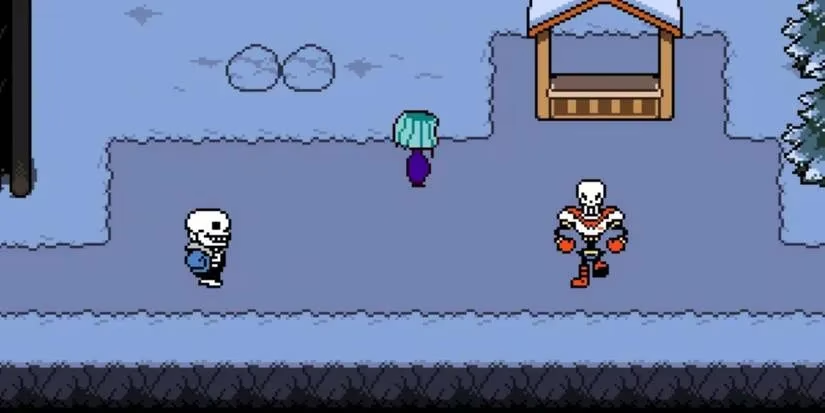
Then there are the brothers who redefined what a skeleton could be in a narrative-driven game. Entering the world of Undertale, I was completely disarmed by Sans and Papyrus. Here were skeletons who weren't guarding dungeons but living in houses, cracking puns, and cooking questionable spaghetti. Papyrus, with his unwavering dream to join the Royal Guard, and Sans, with his laid-back demeanor and winking eye, created some of the most genuinely funny and heartwarming moments in my gaming memory. They weren't monsters; they were personalities, proving that skeletons could carry as much emotional weight and humor as any fleshy character.
The crown for the funniest Grim Reaper, however, has to go to Greg from Conker's Bad Fur Day. Picture the classic, imposing figure of Death... then give him a squeaky voice, a gold tooth, and opinions on cats. Greg was a masterpiece of comedic subversion. His high-pitched chatter and the moment he whipped out a voice-changing megaphone were strokes of genius. He taught me that even the ultimate symbol of finality could have a hilarious, quirky side.
⚔️ The Heroes & Lords: Skeletons with a Story to Tell
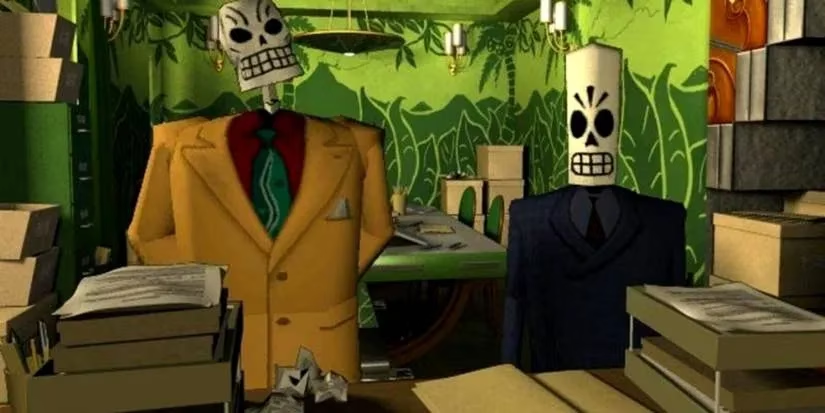
Some skeletons aren't just side characters; they are the story. My journey as Manny Calavera in Grim Fandango remains one of my most cherished gaming experiences. Here was a skeleton as a travel agent for the dead, a film-noir-inspired protagonist in a stunning Art Deco underworld inspired by Mexican Dia de los Muertos. Playing as Manny wasn't about fighting the undead; it was about being the undead, navigating bureaucracy, love, and intrigue. The remastered version only cemented his status as perhaps the most stylish and uniquely characterized skeleton in all of gaming.
Another skeleton who grabbed the hero's role by the, well, spine, was Sir Daniel Fortesque. In MediEvil, I guided this bumbling, jawless knight on a quest for redemption. Dan's design oozed The Nightmare Before Christmas charm, and his gameplay gimmicks—like using his own detachable arm as a weapon—were brilliantly morbid and fun. He was an endearing underdog, a hero who was literally pieced back together, and his remaster allowed a new generation to appreciate his gothic, comedic adventure.
On the opposite end of the moral spectrum, sailing the seas of Sea of Thieves, I've felt the imposing presence of Captain Flameheart. What starts as a ranting, floating skeleton head in the sky evolves into a central figure of the game's deep lore. By 2026, his influence has only grown. The recent Seasons have allowed players to delve into his story, even pledging allegiance to his skeleton crew in PvP to earn a coveted skeleton curse. He represents the evolving, world-building potential of a skeleton character—not just a boss, but a faction, a legend, and a permanent part of the game's living world.
💀 Why Do We Love These Bony Figures?
So, why have these characters resonated so deeply with players like me? I think it comes down to a few key factors:
| Reason | Explanation | Example |
|---|---|---|
| Visual Design & Recognition | A skeleton is a simple, universally understood silhouette that allows for incredible creative variation. | Scorpion's hidden skull, Manny's calavera style. |
| Narrative Flexibility | They can be tragic, heroic, comic, or evil, often embodying themes of life, death, and what lies beyond. | Sir Dan's redemption, Greg's comedic death. |
| Subversion of Expectation | Taking a traditionally scary figure and making it funny, friendly, or heroic is inherently engaging. | Sans & Papyrus, Dry Bones. |
| Gameplay Identity | Their undead nature often translates into unique, memorable abilities. | Spinal's cackle, Dan's arm weapon, skeleton curses. |
In the end, these digital skeletons are more than just pixels arranged like a biology diagram. They are vessels for storytelling, humor, style, and challenge. They remind us that even in a form stripped of flesh, there is room for personality, legacy, and immense fun. As I look at my gaming library in 2026, I see their grinning visages on the covers and in my memories, and I know the future of gaming is sure to have a few more legendary bones to rattle. After all, in a medium all about bringing the imaginary to life, what could be more perfectly paradoxical than falling in love with the dead?