
Sea of Thieves has always been a game where the horizon is both invitation and threat. For a new pirate, the difference between a profitable merchant run and a soggy disaster often comes down to one question: where are the chickens, pigs, and snakes? That is why a community-made animal spawn map from Reddit user Nhymn still deserves a place in the 2026 conversation. It is not an official Rare tool, and it is old enough to have barnacles, but it solves a very human problem—turning a vast, blue sandbox into a checklist that a crew can actually follow. 🏴☠️
What the Map Actually Does 🗺️
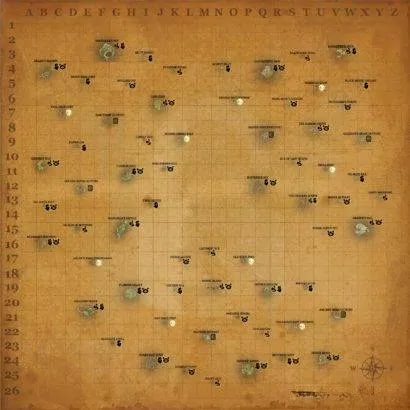
The map covers the whole sea and marks animal locations on each island, along with forts and outposts. In the original merchant-minded context, that meant chickens, pigs, and snakes—the trio that once made trade-good voyages feel like a scavenger hunt with a bill attached. Nhymn reportedly checked the work systematically and confirmed it stayed accurate, though it was never entirely clear whether animal spawns were random. The sensible 2026 reading is to treat the animal data as a loose guide and the forts and outposts as fixed landmarks. Forts and outposts stay put; animals have a habit of making liars out of even careful cartographers.
| Map layer | Why it matters | 2026 caveat |
|---|---|---|
| 🐔 Animal spawns | Chickens, pigs, and snakes for trade-good contracts | Use as a first lead, then verify in-game |
| 🏰 Forts | Danger, loot, and useful navigation anchors | Stable locations, but activity varies |
| ⚓ Outposts | Turn-ins, supplies, and crew resets | Reliable fixed points |
A Strange Classroom for Merchant Sailors
Animal voyages were never the flashiest part of Sea of Thieves. They were the equivalent of being asked to run a floating petting zoo while rival crews circled like sharks with cannonballs. Yet that is exactly why the map mattered. A pirate could search high and low, island to island, and still miss the one red speckled chicken that would have paid for a new sail. Rare animals such as the red speckled chicken were worth a generous reward, and Captain’s Chests hidden in the nooks and crannies of various islands added another layer of treasure-hunting temptation. The map is a lighthouse built from crowd-sourced guesswork: it does not sail the ship, but it keeps a pirate from steering straight into confusion.
Animal spawns can behave like a ship’s cat that only sometimes points north—useful, charming, and never fully trustworthy. That is not a reason to ignore the map. It is a reason to use it the way experienced pirates use rumor: as a starting point, not a sworn affidavit. Treat the map less like a sacred scripture and more like a weather-beaten pub story that happens to contain coordinates.
The Launch-Era Drama That Still Echoes 💰
In 2026, Sea of Thieves is a much older and broader game than the one described in the original report. It is available on PC, Xbox consoles, and PlayStation 5, and its voyage systems have changed over time. Modern players should therefore treat Nhymn’s chart as a historical and structural guide rather than a live database. The animal locations may need cross-checking after updates, but the map’s teaching value remains: it helps new crews understand island layouts, outpost spacing, and the old rhythm of merchant work.
The original context also included a reward-delay controversy. Players turning in chests, skulls, and similar loot were not receiving the gold and reputation they expected, and Rare said the system was simply delaying those rewards. Many players rightly felt that waiting around for a core progression system was not acceptable. The game also planned to charge players gold when they died, with costs varying by death type and no charge for PVP-related deaths. That idea was extremely unpopular, and it remains a useful reminder that community trust is easier to lose than a sloop in a storm.
How to Use the Map in 2026 ⚓
-
Start with outposts and forts as fixed anchors. They are the map’s most dependable features.
-
Use animal spawns as a first lead, not a final contract. Updates and server behavior can shift the details.
-
Cross-check rare targets such as the red speckled chicken and hidden Captain’s Chests with current crew knowledge.
-
Treat the map as a teaching tool for island layout and voyage planning, especially for players who cannot get their bearings.
-
Remember that Sea of Thieves rewards patience, but not blind patience. A smart pirate verifies, adapts, and keeps sailing. ☠️
The fan map is not a magic compass, and it was never meant to be. It is a helping hand—or hook—from one pirate to another. In a game that thrives on shared stories, that may be the most valuable treasure of all. 🏴☠️