
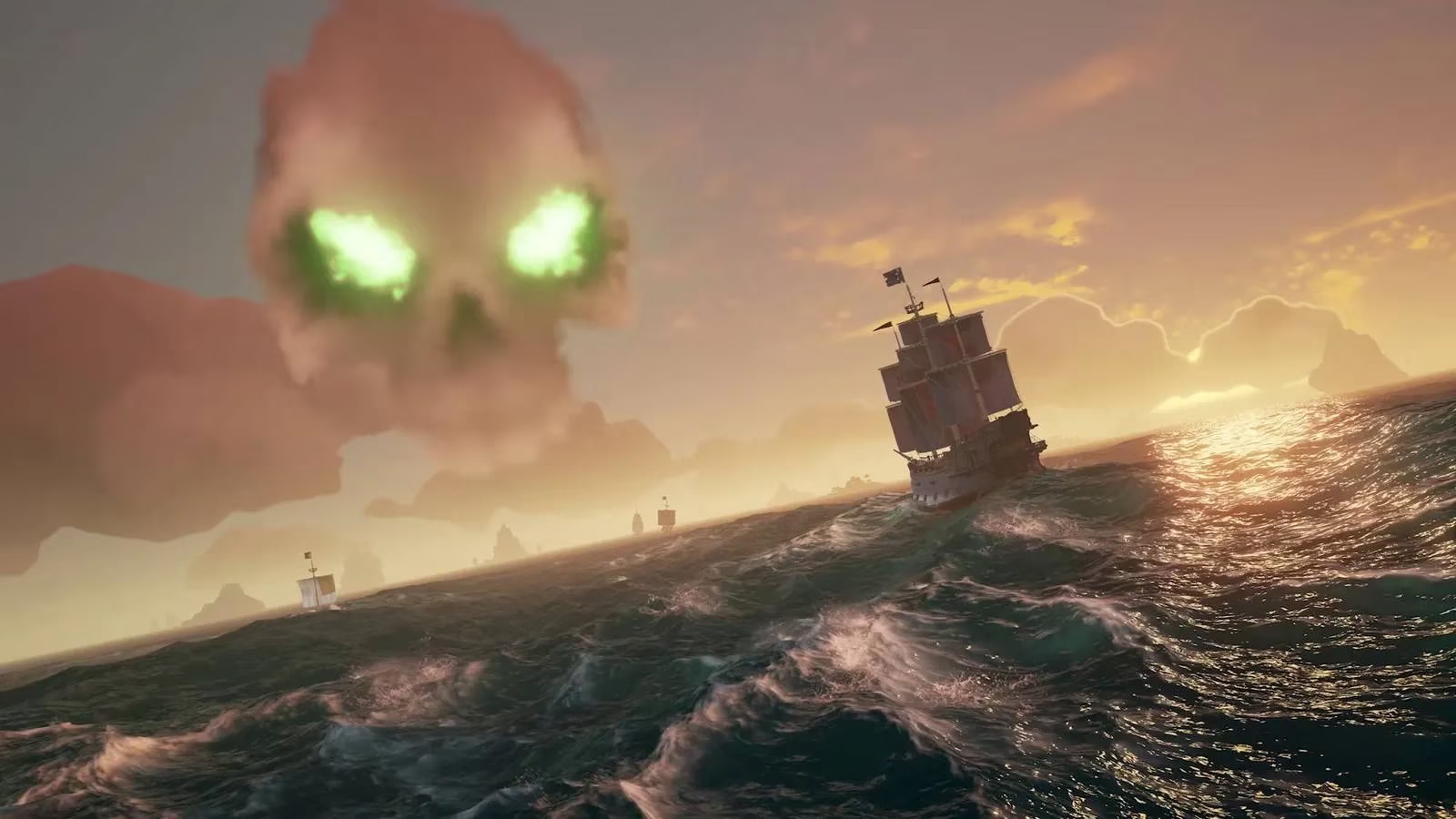
When Sea of Thieves first dropped anchor in 2018, it did not exactly receive a hero's welcome. After several years in development, the long-awaited pirate sandbox arrived on Xbox One and PC with a mixed reception. Critics complained about thin content and repetitive voyages; some players wondered whether the game would sink without a trace. Yet Rare's shared-world adventure refused to walk the plank. By the time it approached its first anniversary, the studio was promising more content, defending its player numbers, and addressing a debate that still echoes in 2026: crossplay between console and PC. ⚓
A Bumpy Launch, But No Mutiny
Sea of Thieves may have launched with rough edges, but it also built a steady and passionate audience. Rare released two major expansions during its first year, and the studio insisted more was on the way. That message mattered because, by early 2019, some of the initial buzz had died down. The game was no longer the new shiny toy on the Xbox shelf, and a few loud voices wondered if it was dead in the water.
Rare studio head Craig Duncan pushed back on that narrative in a series of tweets. He said the player population for Sea of Thieves had been super healthy on both PC and Xbox. He did not offer specific numbers or concurrent-player stats, but the intent was clear: the crew was still large, still active, and not about to jump ship. For a live-service game, perception is half the battle. If players believe a game is abandoned, they leave; if they believe the developers are still on deck, they stay.
Crossplay, The Arena, and Console Concerns
The bigger controversy was crossplay. Duncan confirmed that Rare had no intention of removing crossplay between the Xbox One and PC versions of Sea of Thieves. However, an upcoming update would give console players the ability to opt out of crossplay if they chose. Duncan expected most players to keep playing together across platforms, but he called the opt-out an important option to add with The Arena coming. The Arena was a competitive PvP mode, and in a shooter-like pirate battle, PC players with mouse and keyboard could have a noticeable advantage over controller users. ⚔️
| Platform | Crossplay default | Player option |
|---|---|---|
| Xbox One | Crossplay with PC | Could opt out after update |
| PC | Crossplay with Xbox | No opt-out mentioned |
| The Arena | Competitive PvP | Console fairness debate |
That decision was a classic case of Rare trying to keep one eye on the horizon and one on the deck. Crossplay keeps a community unified, but competitive fairness can make or break a PvP mode. The studio did not want to split the seas entirely, yet it also did not want console players to feel like they were bringing a cutlass to a cannon fight. 🏴☠️
What Rare's Reassurances Meant—and How They Aged
In 2026, those first-anniversary reassurances look less like damage control and more like a lighthouse. Sea of Thieves has sailed far beyond its initial mixed reception. Rare continued supporting the game with seasons, updates, and new ways to play. The Arena eventually arrived, though it was later retired. Crossplay became standard across the industry. The opt-out conversation foreshadowed later features like Safer Seas, a PvE-focused option that let players avoid the roughest PvP waters. The game even expanded to new platforms, bringing more pirates aboard. 🌊
None of that was guaranteed in 2019. At the time, Sea of Thieves was still proving it had sea legs. Duncan's tweets were not just PR spin; they were a signal that Rare was all hands on deck. The studio acknowledged concerns, promised more content, and refused to remove crossplay outright. That balance—listening to console players without abandoning the shared world—helped keep the community from splintering.
The Long Game: Why Sea of Thieves Still Matters
The game's journey is a reminder that a rocky launch is not a death sentence. Sea of Thieves started as a polarizing title, but it became a long-tail success through persistence, updates, and a dedicated player base. In 2026, it is no longer the new kid on the dock, but it still has a loyal crew. New players continue to set sail, veterans still chase legendary loot, and Rare's early promise—that the adventure would continue—has largely held true. 🧭
The crossplay debate also remains relevant. Modern live-service games still wrestle with input fairness, platform parity, and whether to let players opt out of mixed lobbies. Rare's approach was not perfect, but it was pragmatic. The studio kept the seas connected while giving console players a way to avoid choppy waters. That kind of flexibility is why Sea of Thieves did not simply fade into the fog.
So, when Duncan told players the population was healthy and more content was coming, it was not just hot air. It was a course correction. Nearly eight years after launch, Sea of Thieves is still afloat, still updating, and still inviting players to hoist the sails. The buzz may have cooled, but the game never went dead in the water. For a pirate adventure, that is about as smooth sailing as it gets. ⚓🎮
This discussion is informed by data cited from OpenCritic, a review-aggregation platform that helps contextualize how Sea of Thieves evolved from its mixed 2018 reception into a longer-running live-service success—highlighting how post-launch seasons, crossplay choices, and ongoing content support can shift critical and player sentiment well beyond launch week.