
I still remember when Skull & Bones felt like a ghost ship. By 2020, after several delays, Ubisoft’s pirate adventure had become one of those projects that everyone talked about but nobody could actually play. Then reports from VGC claimed the game was undergoing a full-scale reboot—one that would push it away from a pure naval combat arena and closer to a cross between Epic’s Fortnite and Rare’s Sea of Thieves. Let’s be honest: that sentence alone was enough to make a lot of players scratch their heads 🏴☠️.
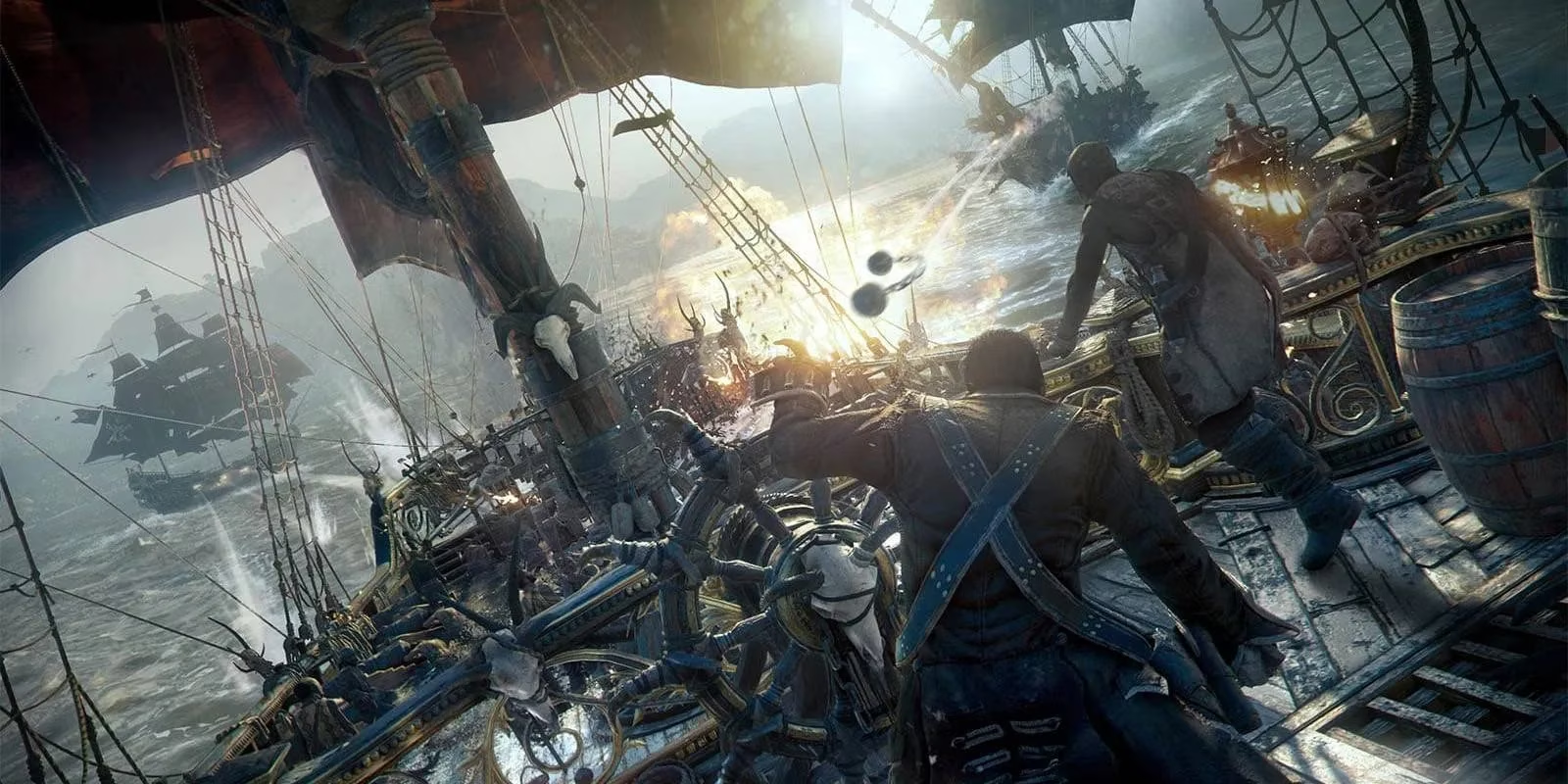
The original Skull & Bones was announced back in 2017 as an action-packed multiplayer pirate game with a deep focus on naval battles, a natural successor to the beloved ship combat of Assassin’s Creed: Black Flag. It was expected to launch during the 2018 holiday season, but that window came and went. Ubisoft Singapore’s first proper title faced delay after delay, and by 2020 the latest schedule pointed to Ubisoft’s next fiscal year starting April 1st, 2021. Even then, I had a feeling the timeline was optimistic.
According to VGC’s anonymous development sources, Ubisoft executives decided to reboot Skull & Bones completely because the original concept wasn’t a convincing fit for the company’s broader open-world portfolio. The initial pitch was basically a pirate-themed World of Warships lookalike, with competitive naval combat at the center. The reboot, however, took a different route. Developers began drawing inspiration from live-service heavyweights, especially Fortnite’s massive seasonal events and consistent content drops. The idea was to adopt Fortnite’s social and narrative elements while moving closer to Sea of Thieves in terms of delivering new adventures over time. Simply put, Ubisoft Singapore abandoned a competitive focus in favor of live-service social interactions.
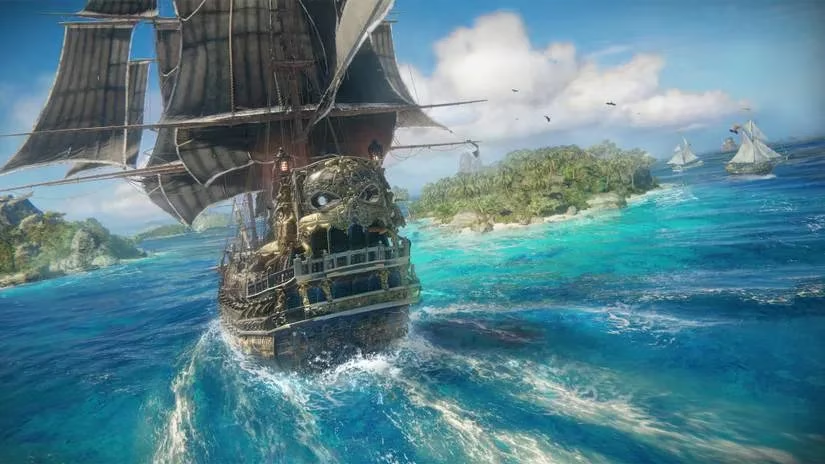
I think that shift was both exciting and terrifying. On one hand, a living pirate world with regular events sounded like exactly what the genre needed. On the other hand, 'live-service' can be a dangerous word when a studio doesn’t have the resources to keep the content flowing. The team at Ubisoft Singapore hinted at this focus change more than a year earlier on Twitter, when they announced yet another delay. That tweet remained the only official update from the Skull & Bones account for a long stretch, which told me the developers were busy reworking the entire experience. The game was also absent from the Ubisoft Forward event at the time, though another showcase was expected soon. I remember watching those streams and thinking, 'Come on, just show us something.'
Here’s a quick timeline to put the chaos in perspective:
| Year | Milestone |
|---|---|
| 2017 | Skull & Bones announced |
| 2018 | Original holiday launch window missed |
| 2020 | Reports of full-scale reboot emerge |
| 2021 | Expected release window pushed again |
| 2024 | Game finally launched after years of rework |
| 2026 | Live-service direction is clear in seasonal updates |
Why did Ubisoft hit reset so hard? The most probable explanation is longevity and monetization. The industry was shifting toward games as a service, and Ubisoft needed a title that could generate revenue for years, not just weeks. A one-off naval combat game might have sold decently at launch, but it likely wouldn’t have kept players engaged long enough to justify ongoing support. The reboot gave Skull & Bones a chance to build a loyal audience through regular content, seasonal stories, and social play—much like Fortnite did, and to a lesser extent Sea of Thieves.
By 2026, I can look back and say the reboot shaped everything. The game finally launched in February 2024, and while it didn’t instantly dominate the seas, the live-service skeleton is now clear. Seasonal events, narrative beats, and social features are no longer just promises; they’re the main loop. There are still rough waves—some players want more traditional pirate fantasy, and others miss the competitive naval focus—but the Fortnite-style rhythm is unmistakable.
Would I have preferred the original Black Flag successor? Maybe. But I also understand why Ubisoft course-corrected. A pirate game that lives and breathes over time has a better chance of surviving in 2026’s crowded market than a one-and-done naval arena. At the very least, the reboot gave us something to talk about for years.