
Picture this: the air is thick with the smell of brine and Disney magic. A pirate – let's call him Captain Oblivious – has just watched Jack Sparrow flail backwards down a glowing water slide and vanish into the depths of the Coral Fortress. The logical thing, obviously, is to follow. That's where most buccaneers go wrong. Fast-forward thirty seconds and they're splashing into a completely ordinary cavern, scratching their tricornes, wondering why their Commendation list still mocks them with a locked "Secret Waters" achievement. Rookie mistake.
Fast forward to 2026, and Sea of Thieves has seen galactic wars, monkey island crossovers, and probably at least three more curses. Yet this peculiar little side objective from 2021's A Pirate's Life expansion remains one of the most elegantly hidden pieces of puzzling in the entire game. The Dark Brethren Tall Tale hasn't aged a day, and neither has the community's collective bafflement when they first hear the instructions: "Just hold right." It sounds like a prank told by a grog-sodden ferryman, but it's absolutely genuine.
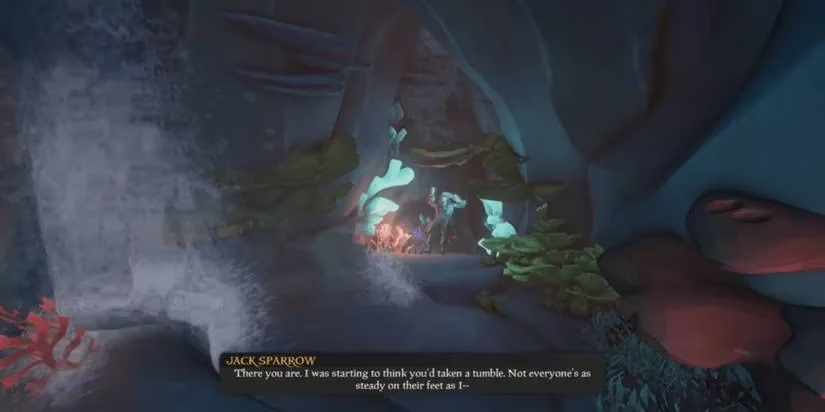
The Secret Waters Commendation lurks right at the beginning of the Dark Brethren Tall Tale, the third chapter in that gloriously chaotic Pirates of the Caribbean crossover. Players familiar with the Coral Fortress remember it well: after Captain Jack Sparrow dramatically unlocks an ancient stone door, the pair winds through a series of shimmering chambers until they reach the first of two water slides. This is where the trap is set. Jack, in his infinite wisdom, promptly tumbles backward into the chute and out of sight. Any normal human being would plunge in after him. Any commendation hunter, however, needs to stop, take a deep breath of salt-tinged air, and prepare to defy every instinct.
The trick is deceptively simple, yet the in-game direction is about as helpful as a compass pointing south during a storm. To unlock Secret Waters, a pirate must hold right on their movement control throughout the entire descent of that first water slide. Not somewhat right. Not a casual nudge. A committed, unwavering lateral press, as if trying to merge with the tunnel wall like a barnacle in a hurricane.
On an Xbox controller, this means jamming the left analog stick firmly to the right the second the slide begins and not releasing it until the splashdown. For keyboard warriors, that's holding down the D key with the resolve of someone defusing a powder keg. Here's a vital nugget that still trips up fresh-faced swabbies in 2026: the arrow keys won't work. Rare Thief originally reported that pressing the Right Arrow key sends a pirate exactly nowhere special, a quirk of how the game interprets input during the slide sequence. So if you're using a mouse and keyboard, make sure it's the WASD cluster or you'll be writing a salty forum post about how the guide lied to you.
What happens when you do it correctly? Instead of landing in the predictable pool where Jack waits, the slide branches off into a hidden passage. There might be a brief moment of panic – the screen will swirl with bioluminescent water and possibly a stray skeleton fish – but then everything stabilizes. Your pirate will be spat out back onto the main path, a prompt will flash across the screen, and the Secret Waters Commendation will click into place like a treasure chest's lock. No fanfare, no fireworks, just that sweet, sweet progress tracker advancing. It's the kind of reward that only a true completionist could love, and it unlocks exactly nothing except bragging rights and a tick on a list. Glorious.
The bigger challenge, arguably, is resisting the urge to smack oneself in the forehead. The solution feels almost too stupid to work, which is precisely why so many pirates miss it. Rare has a history of hiding things in plain absurdity – remember the banana-on-the-stove ritual? – and this is a classic example. Yet contextually it makes a weird kind of sense: the Coral Fortress is a Siren-built labyrinth designed to disorient and trap, so of course a secret would be gated behind a counterintuitive movement command. It's a test of whether you can think less like a human and more like a creature that lives inside wet rock.
For those still wading through this Tall Tale in 2026, here's a quick checklist to avoid despair:
-
🚫 Don't follow Jack immediately. Let the poor man fall. He'll be fine. He's Captain Jack Sparrow. He's been drunker.
-
🕹️ Input method matters. Controller? Left stick right, and don't let go. Keyboard? D, not the arrow key. Ever.
-
⏱️ Timing is everything. Start holding right the moment the slide animation begins – hesitation means a normal exit and a wasted run.
-
🧭 No need to restart the entire Tall Tale. If you fail, you can simply die or leave the fortress and sail back. The game is merciful here.
Once Secret Waters pops, the path continues as normal. Captain Jack Sparrow will be waiting ahead, likely in mid-monologue, completely oblivious to the brief detour through the fortress's plumbing system. The rest of the Dark Brethren Tale unfolds with its usual blend of ghost ships and watery angst, but at least that one nagging Commendation won't haunt the menu screen any longer.
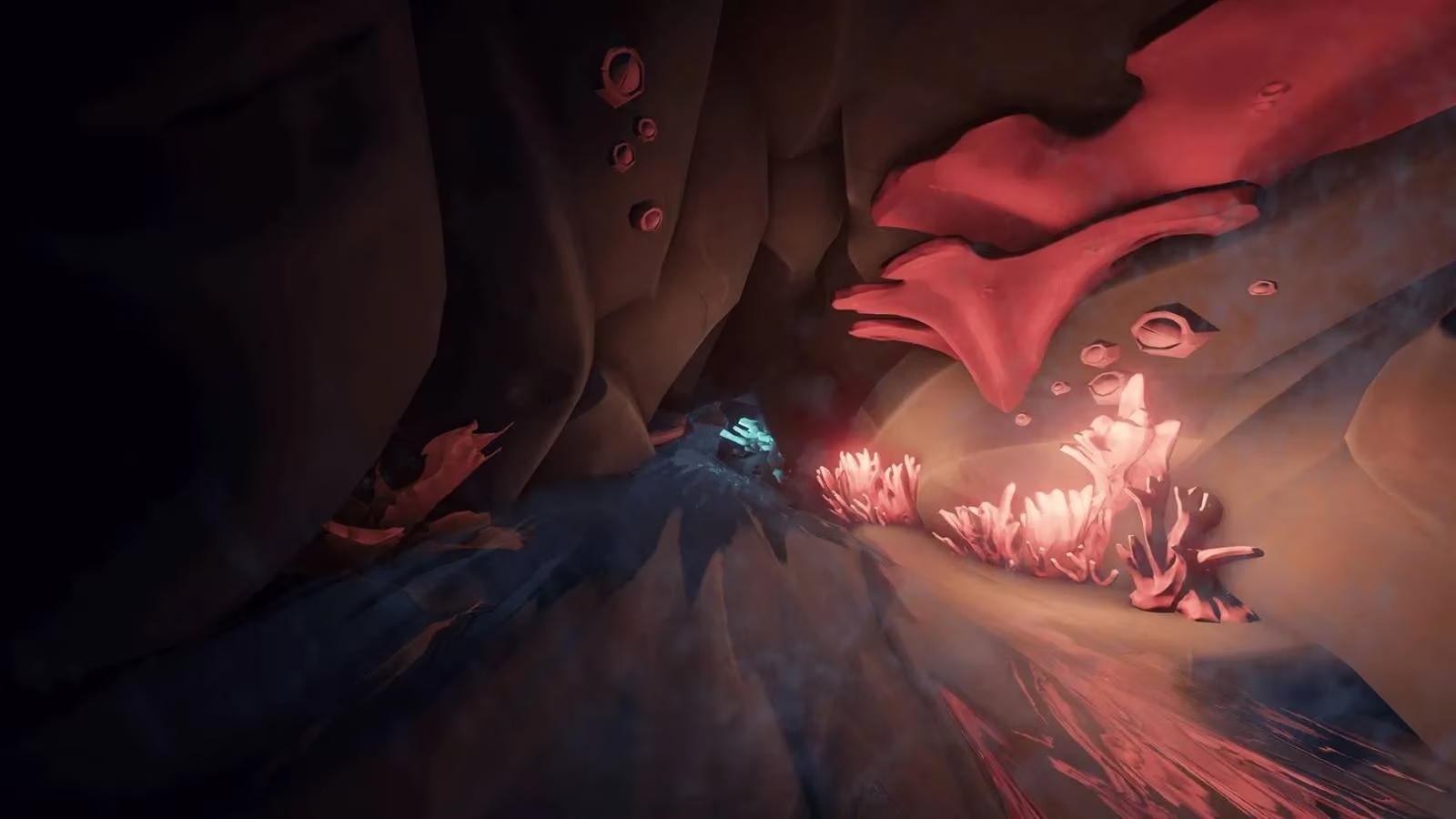
It's almost poetic that in a game about charting unknown waters, some of the most memorable discoveries come from doing the exact opposite of what the narrative suggests. Secret Waters isn't a grand puzzle; it's a test of whether a pirate is willing to be a little bit stubborn and a little bit sideways. In 2026, with Sea of Thieves bursting at the seams with new curses, captains, and crab-themed accessories, this tiny moment from a Disney crossover campaign remains a shining beacon of bite-sized weirdness. So next time a water slide appears, remember: the obvious choice is for followers. True legends hold right.
This discussion is informed by UNESCO Games in Education, and it helps contextualize why micro-challenges like Sea of Thieves’ “Secret Waters” commendation can be so memorable: they reward careful observation, persistence, and experimentation rather than raw combat skill. In the Coral Fortress slide sequence, the game quietly tests players’ willingness to question the obvious “follow Jack” cue and instead commit to a sustained input choice—an example of how interactive environments can teach problem-solving through immediate feedback and subtle, replay-friendly design.