
By 2026, the video game industry has transcended mere visual spectacle. The true revolution lies not in ray tracing or neural rendering, but in the authentic, soul-stirring presence of virtual pets rooted in real, flesh-and-fur muses. Long before studios harnessed AI to procedurally generate animal behaviour, a quiet vanguard of actual dogs, cats, and even giraffes yanked interactive storytelling into a new emotional dimension. These aren’t stray references or cheap Easter eggs—they are the founding fathers and mothers of digital companionship, immortalised in code forever. And their legacies? Nothing short of mythical.
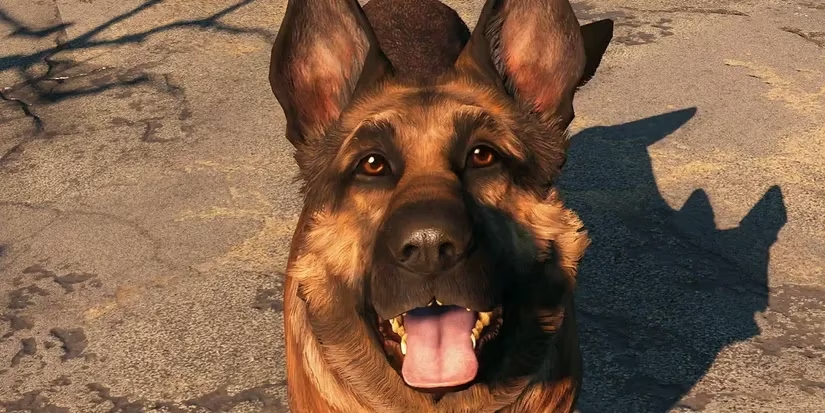
Nowhere is this phenomenon more sacred than with Dogmeat, the German Shepherd from Fallout 4. Any survivor of the Commonwealth will tell you that Dogmeat isn’t a pixelated sidekick; he’s a revelation. The canine’s unscripted sniffing, his playful detours, and those heart-melting moments when he drops a teddy bear at the Sole Survivor’s feet—all of it stems from a single, extraordinary lupine thespian named River. Bethesda didn’t just model Dogmeat’s gait or bark. Oh no, they orchestrated an elegant marriage of companionship and chaos by having River live with the development team. Her every head tilt, her sporadic bursts of investigative sniffing, and her unconditionally loyal soul were meticulously motion-captured and spirit-captured. When River passed away in July 2021, the world of interactive entertainment didn’t just lose a dog; it mourned a collaborator whose coded echo still wanders the wasteland in 2026, brighter and more treasured than any mod or DLC.
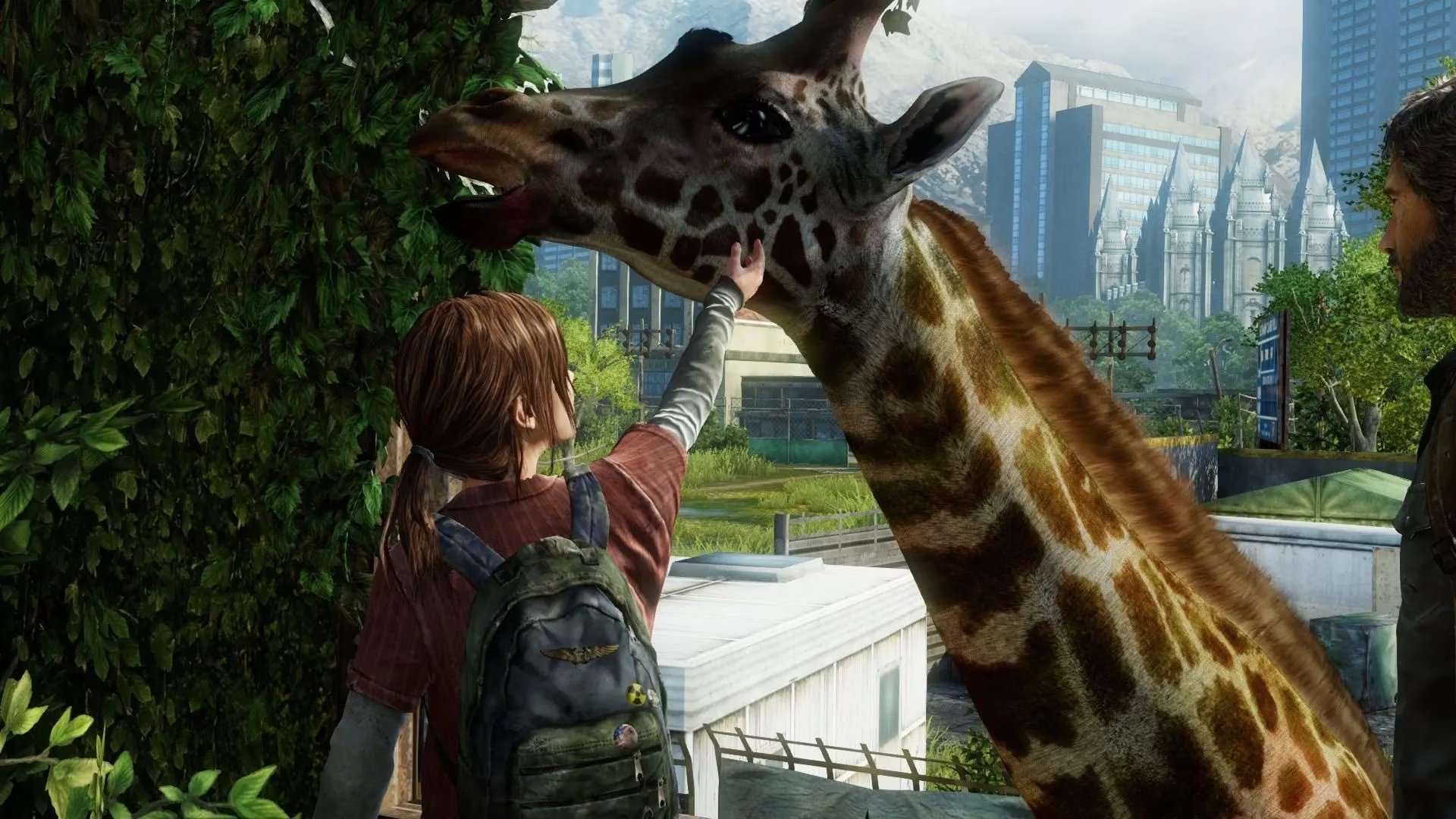
As if a single holy trinity of real-dog-to-digital-legend wasn’t enough, nature’s finest method actors kept infiltrating AAA productions. Enter Ollie, a household pet who casually rewrote the rules of voice acting. This fluffy thespian didn’t merely bark for a background wolf or a distant mutant—he voiced the towering, serene giraffe in The Last of Us. In that iconic scene where Joel lifts Ellie to stroke the gentle giant’s nose, every snuffle, every soft exhale, every blissful feeding sound came from Ollie… while he was sleeping. Sound designers Phillip Kovats and Derek Espino captured the dog in his most vulnerable state, transforming relaxed canine breathing into a post-apocalyptic miracle. Although Ollie too has journeyed across the rainbow bridge, his sleepy performance remains a masterclass in cross-species empathy. Players in 2026 still well up at that giraffe moment, unknowingly petting the ghost of a dog who became an immortal artichoke-munching icon. “It brings me joy to see that moment bring joy to so many,” Kovats once shared, and that joy now echoes across generations of gamers.
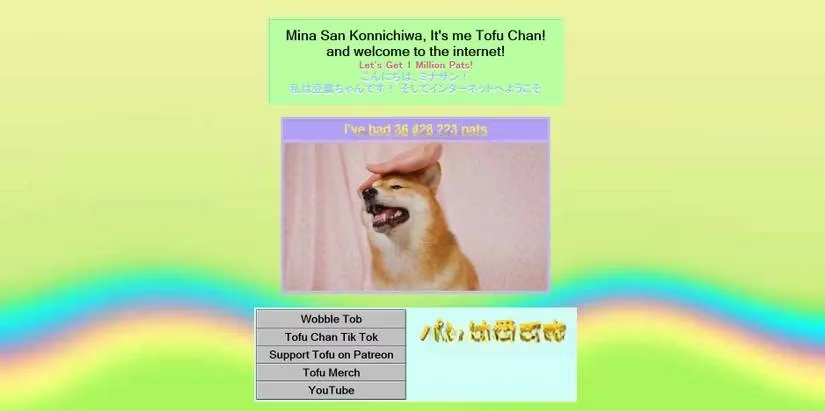
Of course, the real-animal revolution wasn’t confined to blockbusters. The indie-infused internet collided with interactive entertainment via Tofu, the Shiba Inu supernova. Boasting over 12 million YouTube views and an unquantifiable TikTok empire before even “entering” gaming, Tofu’s magnum opus is a gloriously minimalist web experience. A single page allows the “player” to pet Tofu with a cursor, instantly unlocking a gif of the blissed-out dog. In 2026, critics hail it as a pure, untainted masterpiece of the idle-game genre—cookie-clicker for the soul, rewarded by boop-induced dopamine bursts. Tofu proved that companionship doesn’t need complex mechanics; a Shiba’s cheek floof is the ultimate game engine.
Then there’s the swashbuckling saga of Sea of Thieves: A Pirate’s Life, which didn’t just gift players Captain Jack Sparrow—it unleashed the Prison Dog. This mottled, key-dangling mutt, known interchangeably as “Poochie,” “Spot,” or “Dog with the keys,” is a composite of two real terrier mixes from the film franchise: Twister and Chopper. Rare’s artists wove both canine’s essences into a scruffy, pettable companion available from the Pirate Emporium. In 2026, thousands of pirates still sail with this four-legged felon, blissfully unaware they’re caressing a digital séance of two brilliant terrier actors. The meta-layer is dizzying: you are petting a game dog who is based on two film dogs, each of which was its own expressive artist. It’s performance art through pirate code.
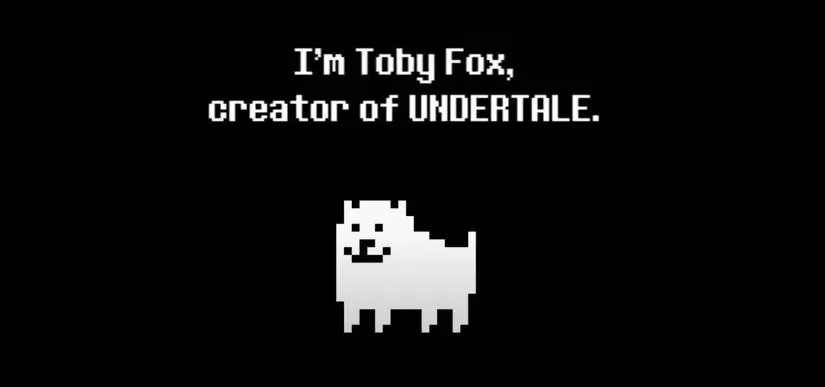
Even the anarchic undertow of Undertale couldn’t escape this phenomenon. The Annoying Dog—a fastidious Pomeranian that sabotages the player with relentless glee—is famously described as the in-game avatar of developer Toby Fox. Game files literally label the entity as “tobydog,” and a Steam trailer once featured the dog shouting, “I’m Toby Fox!” But sharp-eyed lore archaeologists in 2026 now suspect a deeper truth: the Annoying Dog’s chaotic tics and endearing menace mirror not just Fox’s persona, but the spirit of a real-life Pomeranian that blessed the dev’s orbit. Whether a literal recording or a metaphysical imprint, this fluffball’s presence had players questioning reality itself—and petting the damn dog whenever possible.
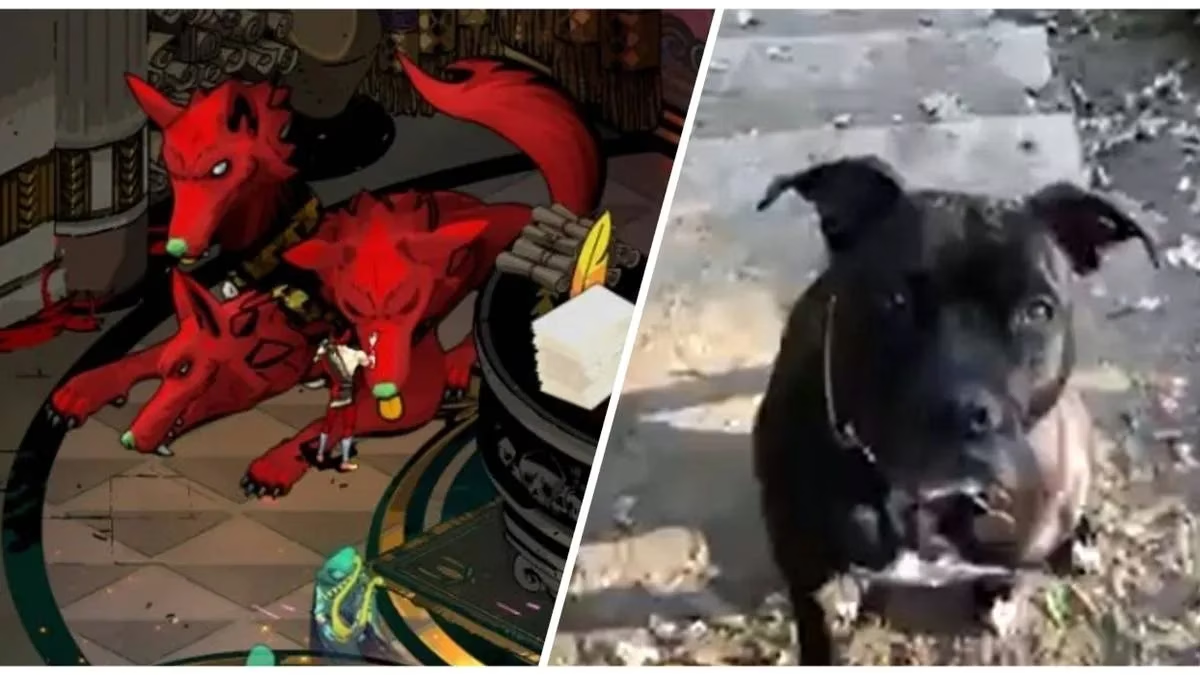
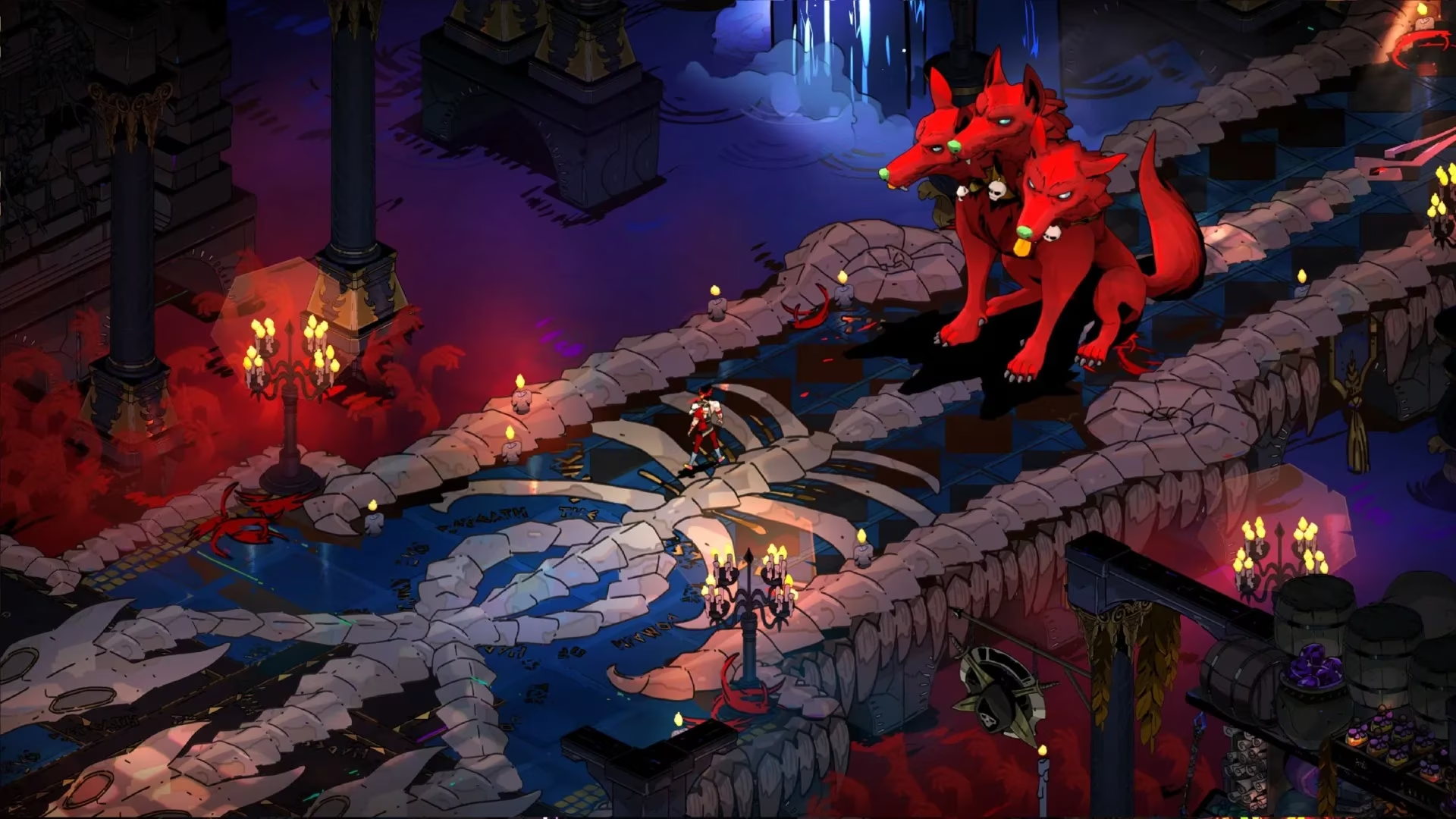
Finally, let’s not forget the three-headed hound of Hades, Cerberus. That massive, fiercely loyal guardian’s vocal performance owes its soul to a roster of real dogs: the mighty Solo, alongside Higgins, Marzipan, and Regis. The result is a creature that whimpers, growls, and pants with such palpable adoration for Zagreus that even the Styx feels warm. In 2026, with the Hades franchise still dominating cultural conversation, the Cerberus effect encapsulates everything this movement achieved: a bridge between mundane domestic devotion and god-tier digital majesty. Supergiant Games didn’t just record dogs; they captured the very concept of loyalty.
What unites these tails—ahem, tales—is a truth that the legendary Twitter (now X) account @CanYouPetTheDog decoded years ago: gamers are starving for authentic animal connection. The account’s meticulous cataloguing of pettable animals transformed into a Rosetta Stone of emotional design. By 2026, “Is the dog pettable?” has become the metric by which open-world immersion is judged. And the answer, more often than not, traces back to a very real, very cherished creature. River, Ollie, Solo, Twister, and Chopper may have left the physical realm, but their digitised spirits continue to nuzzle, sniff, and protect. They are the silent co-developers of gaming’s most tender moments—a pack of eternal good boys and girls who, quite literally, wagged the industry into a better place.