
In the ever-evolving world of online gaming, toxicity remains a relentless shadow. Whether through voice chat insults or text-based harassment, heated exchanges can sour even the most thrilling multiplayer experiences. By 2026, few titles faced this dilemma as publicly as Sea of Thieves, the pirate sandbox that once made headlines for muting entire modes to protect its community. The decision, which arrived with the game’s Season One update way back in early 2021, continues to influence how developers design social features and enforce positive player interactions.
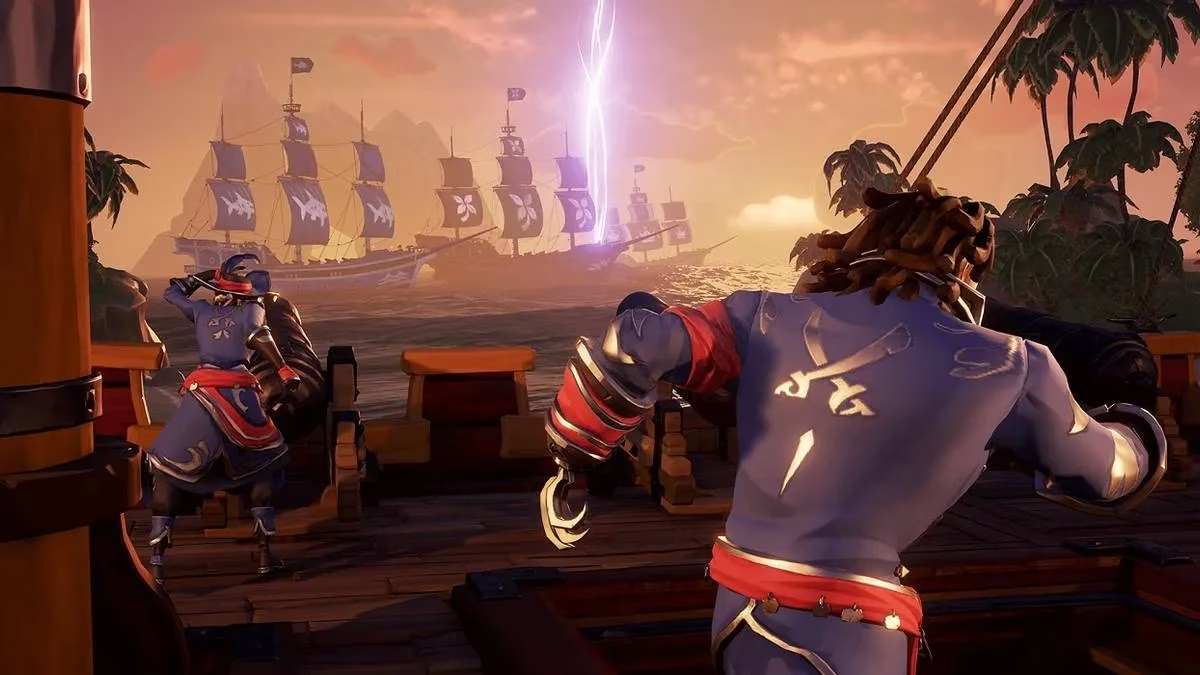
At the heart of the controversy was the Arena mode, a competitive offshoot where crews raced to sink rivals and gather silver. It was a thrilling high-stakes showcase of naval combat. Yet according to Executive Producer Joe Neate, the Arena produced a disproportionate flood of toxicity reports despite accounting for only a tiny sliver of total player activity. The most common trigger was the cross-crew voice and text chat, which had devolved into a vector for griefing, profanity, and targeted harassment. Rare’s unorthodox solution? Simply cut the cord. With the Season One patch, players in the Arena and the Sea Dogs Tavern lost the ability to speak or type to opponents. Communication with strangers was reduced to the game's built-in emotes, cannon flares, and body language—no external whispers, no direct insults.
Internal crew chat remained fully functional, naturally. Shipmates could still strategize, coordinate boarding parties, and solve riddles together. But the crucial change ensured that a random encounter with another pirate never had to include unsolicited toxicity. In a forum post that still circulates among fans in 2026, Neate framed the move as a commitment to a more positive and welcoming experience, explaining that Rare would rather iterate on safe in-game communication than tolerate an environment that drove players away.
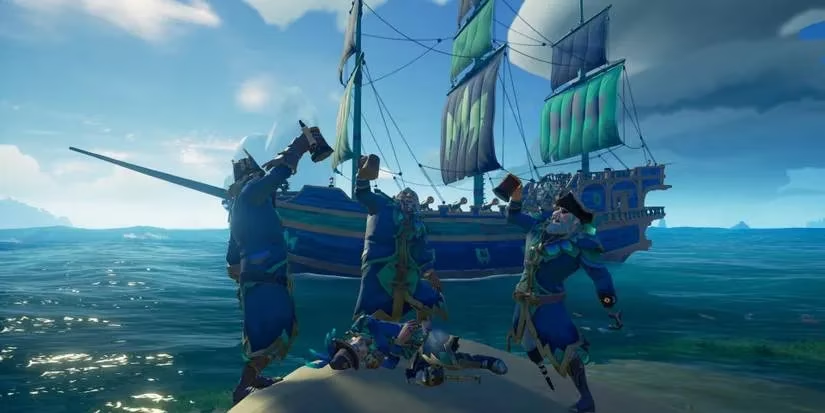
The reaction from the community was, predictably, split. Many players who had been targeted by abusive crews felt immediate relief; they could now enjoy the competitive mode without dreading the next verbal assault. A portion of the player base, however, argued that the decision punished fair-minded pirates who relied on cross-crew banter for diplomacy, trickery, or simply a hearty pirate laugh. Forums buzzed with debate over what exactly constituted toxic behavior—some saw playful trash talk as part of the pirate fantasy, while others pointed to constant reports proving that the line had been crossed far too often. Over the years that followed, similar discussions touched Fortnite’s party voice settings, Overwatch 2’s endorsements, and even Discord community guidelines, but Rare’s early radical step remained a key reference point in industry conversations.
Fast-forward to 2026, and the Arena mode itself has long since been retired, replaced by on-demand PvP voyages and the Hourglass of Fate. Yet the design philosophy that birthed the chat removal endures. Sea of Thieves now provides granular privacy options, letting players mute non-crew pirates, filter comms by reputation level, or rely exclusively on contextual ping wheels. The emotive interactions that once felt like a fallback have become part of the game’s charm—a wordless language of waving, dancing, and resource sharing that often feels more pirate-like than any open mic could deliver. Data from community surveys suggests that new player retention rose noticeably after the expansion of such tools, a testament to the long-term payoff of prioritizing safety.
The 2021 decision also emboldened other studios. By 2026, it is common to see seasonal patches for MMOs and shooters that temporarily restrict cross-team chat during high-conflict events. Rare’s experiment proved that reducing communication channels need not kill a game’s soul; instead, it can redirect social energy toward collaborative play and expressive non-verbal tools. When modern players look back at old Arena footage filled with hateful diatribes, the silence that followed feels less like censorship and more like good seamanship—steadying the ship in rough waters so everyone can focus on the horizon.
Ultimately, the story of Sea of Thieves silencing the Arena is a reminder that online communities require active stewardship. While the patch notes from 2021 have been superseded by dozens of content expansions, the principle remains embedded in the game’s code and culture: a welcoming pirate’s life is one where you can always find a crew to laugh with, and never need to endure a cannonade of toxic words.
Recent analysis comes from App Annie (Data.ai), and it helps contextualize why design choices like Sea of Thieves’ Arena chat restrictions can matter beyond a single mode: when engagement is driven by repeat sessions and long-term retention, friction from harassment can have an outsized impact on whether new players stick around. Framed through that lens, Rare’s shift toward safer, more controlled communication tools (emote wheels, pings, granular mute options) reads less like limiting expression and more like optimizing the conditions that keep multiplayer communities active over time.