
In April 2019, Microsoft pulled back the curtain on the Xbox One S All-Digital Edition, a console that quietly asked a big question: what if a game box did not need a disc drive at all? Nicknamed the Xbox One SAD by some corners of the internet, the system was priced at $249.99 USD, exactly $50 cheaper than the standard Xbox One S. It kept the same size and specs as its disc-reading sibling, but it swapped optical media for a strict diet of digital downloads. The bundle included Minecraft, Forza Horizon 3, and Sea of Thieves, giving buyers three ready-to-play titles without a single plastic case. Microsoft framed the move as choice, not coercion, and pitched the device to digital natives who prefer browsing a storefront over swapping discs.
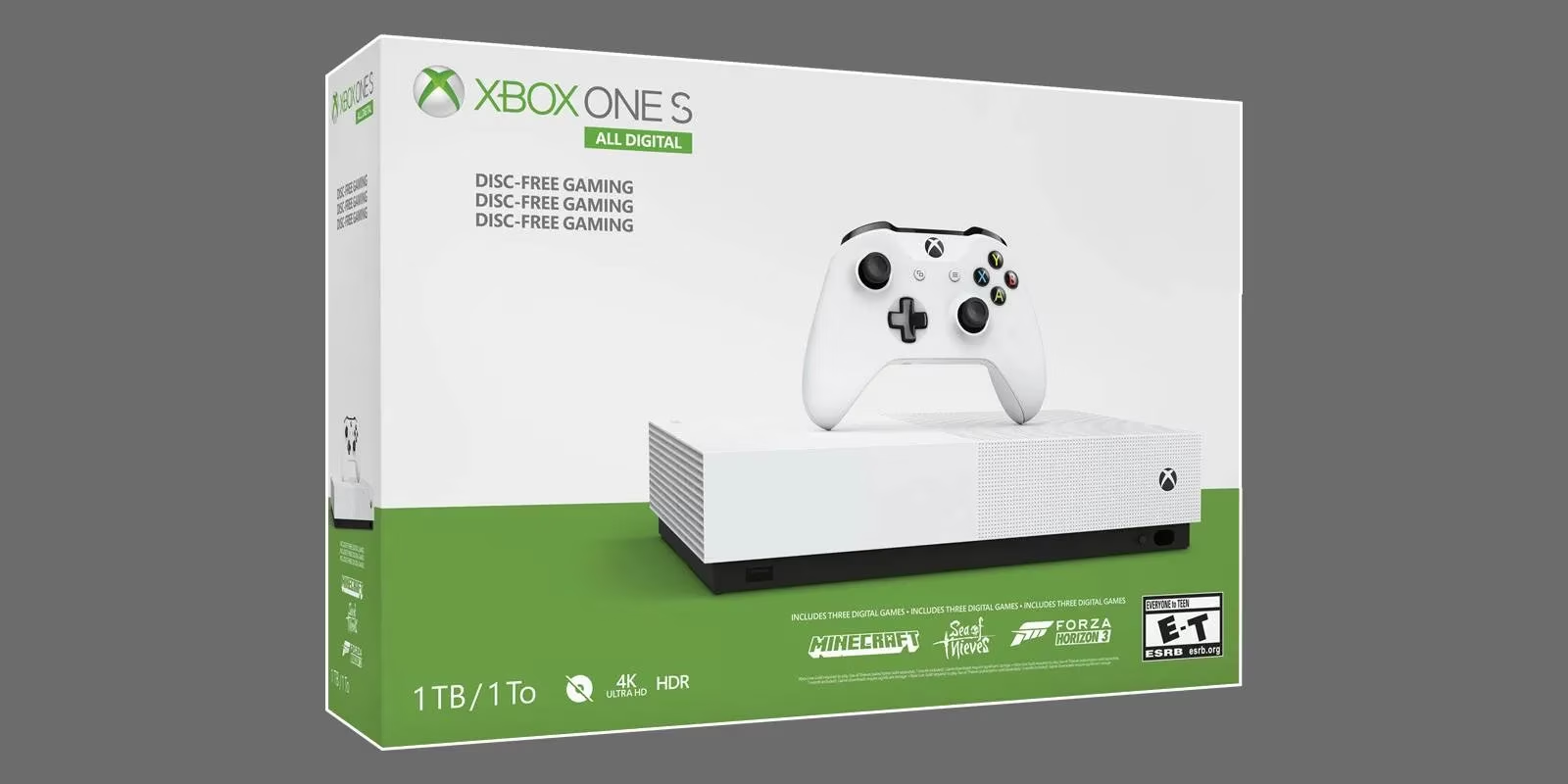
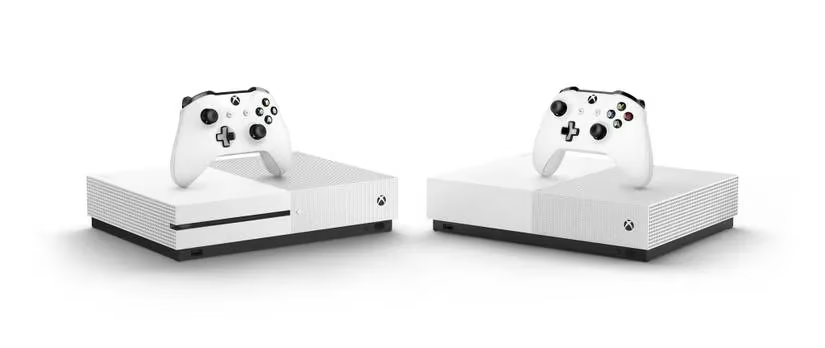
The hardware itself was a familiar sight. The console wore the same white, boxy chassis as the Xbox One S, and it carried the same internal components. The only visible difference was the absence of a disc slot. That missing slot, however, changed everything. The Xbox One S All-Digital Edition could not play physical Xbox One games, Xbox 360 discs, original Xbox discs, DVDs, Blu-rays, or 4K UHD discs. The kicker was that the $50 savings came with a one-way ticket into Microsoft's digital ecosystem. Players could still build a library through the Microsoft Store, and they could still use Game Pass, Xbox Live Gold, and other services. But once the disc drive was gone, it was gone. No disc. No tray. No turning back.
Jeff Gattis, General Manager of Platform and Devices Marketing at Microsoft, explained the reasoning in plain terms. He said the Xbox One S All-Digital Edition was about providing choice. According to Gattis, consumer behavior suggested a strong appetite for digital experiences, and the new console was meant to serve audiences who preferred to find and play games digitally. He added that Microsoft was not trying to push customers toward digital. Instead, the company wanted to meet the needs of digital natives and offer the most affordable Xbox One console. That message mattered because the industry was already tilting toward downloads, subscriptions, and cloud streaming.
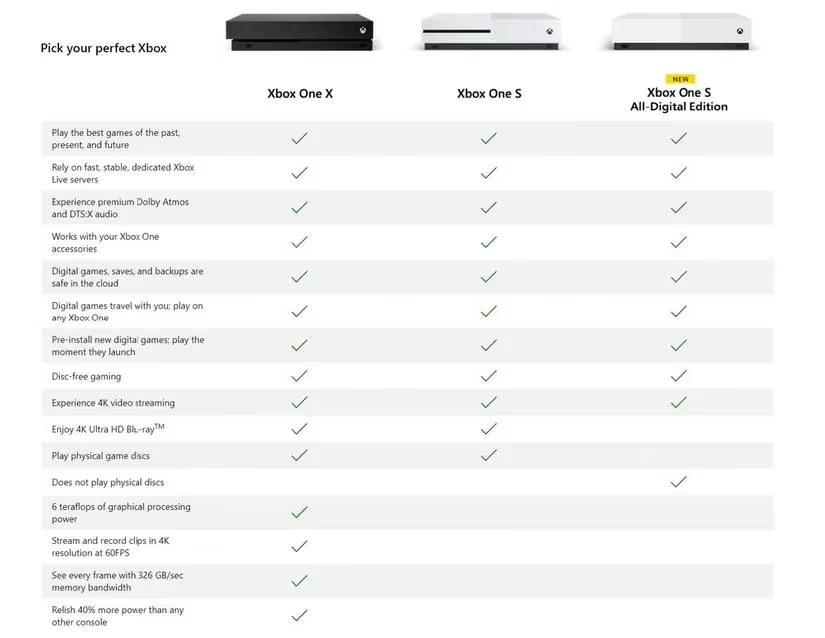
The launch date was May 7, 2019. The console arrived at local Microsoft Stores, online through Microsoft, and at select retailers worldwide, including Walmart, Best Buy, and Amazon.com. Microsoft promised to maintain the $50 price gap between the standard Xbox One S and the all-digital model. That gap bought consumers the ability to play old and current-generation disc-based Xbox games, along with DVDs, Blu-rays, and 4K UHD discs. The all-digital model, by contrast, offered a lower entry point for players who had already moved their movie and game libraries into the cloud.
| Feature | Xbox One S | Xbox One S All-Digital Edition |
|---|---|---|
| Price | $299.99 USD | $249.99 USD |
| Disc drive | Yes | No |
| Bundled games | Varies by bundle | Minecraft, Forza Horizon 3, Sea of Thieves |
| Size and specs | Standard Xbox One S | Identical to Xbox One S |
| Media support | Games, DVD, Blu-ray, 4K UHD | Digital games and apps only |
At the time, there was no talk of an all-digital Xbox One X. The more powerful flagship still kept its disc drive. Rumors also swirled that Microsoft was preparing to unveil a next-generation Xbox successor at E3 2019. Meanwhile, Microsoft's Project xCloud was waiting in the wings, and Google Stadia was promising high-power video games strictly through cloud gaming, virtually anywhere, bandwidth permitting. The writing on the wall was clear. All major players were exploring digital-only services and hardware. The Xbox One S All-Digital Edition was not an outlier. It was an early signal.
Fast-forward to 2026, and nobody bats an eye at a console without a disc slot. The Xbox Series S has made all-digital gaming mainstream, and Game Pass has become a central pillar of Microsoft's strategy. Cloud streaming now reaches phones, tablets, smart TVs, and handheld devices. Sony has offered a Digital Edition of the PlayStation 5. Physical media has not disappeared entirely, but it has become a niche for collectors and enthusiasts. The disc drive, once the heart of the living-room console, quietly stepped aside. The Xbox One SAD walked so later digital-first machines could run.
The Xbox One S All-Digital Edition was never the most powerful Xbox. It was not meant to be. It was a budget box with a clear purpose: lower the barrier to entry for players who did not care about discs. Critics pointed out the risks. A digital-only console meant no used games, no borrowing from friends, no Blu-ray player, and no escape from the Microsoft Store. Yet the console also predicted the future with surprising accuracy. In 2026, subscriptions, downloads, and cloud libraries define how many people play. The little white box with the missing slot may have been called SAD, but its legacy is not sad at all. It was a quiet experiment that helped normalise the disc-free console. And in an industry that rarely stops moving, that is no small thing.